Mission Accomplished! Our First Card Design Playshop Was a Joyful Success!
October 17th, 2025
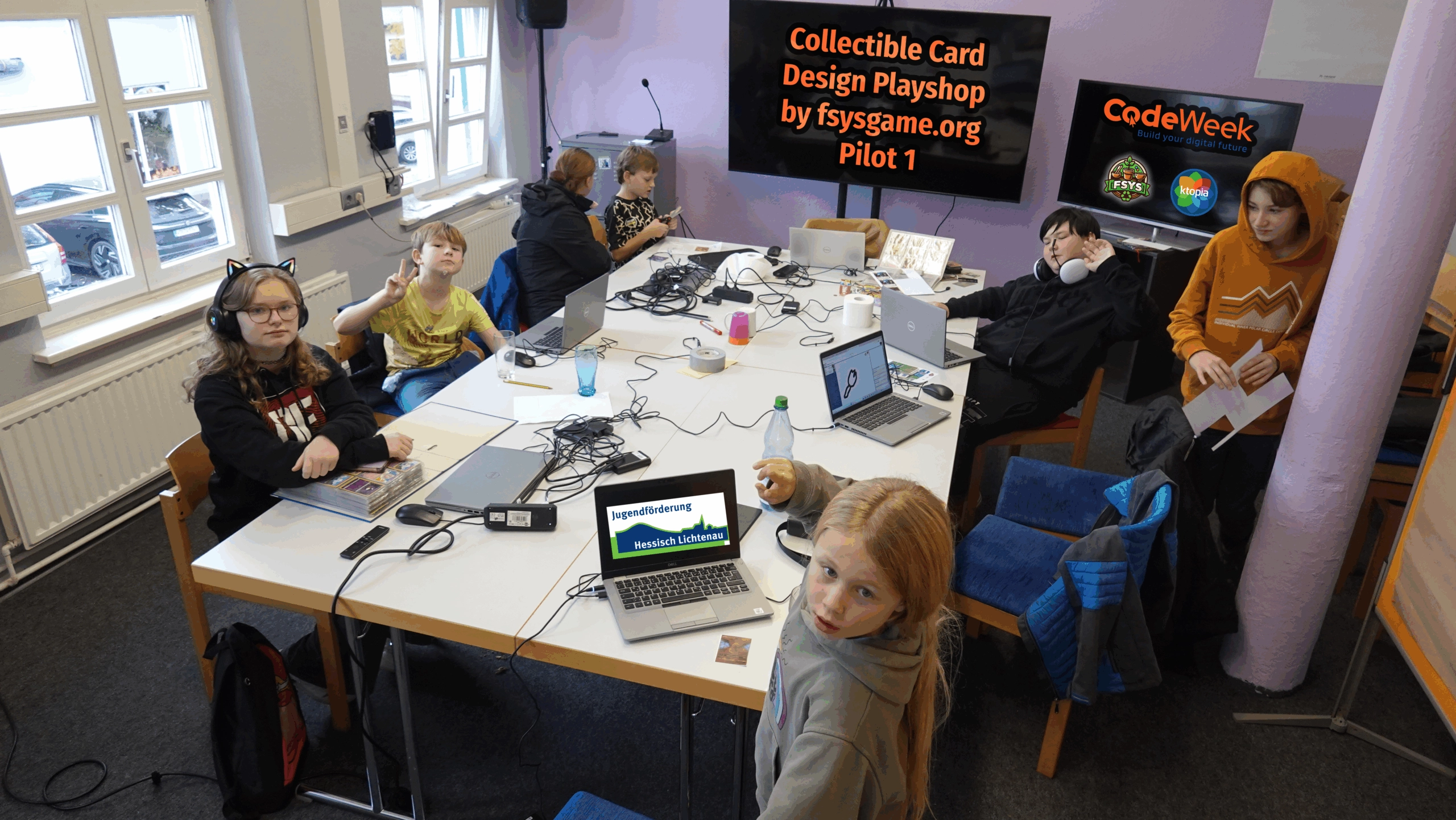
Planning with pen and paper, sketching by hand, using the open-source graphic design app Krita, and AI tools for the creation of cards. Our participants uploaded their results to our open-source Nextcloud for collaboration, then printed, cut, and sleeved their cards.
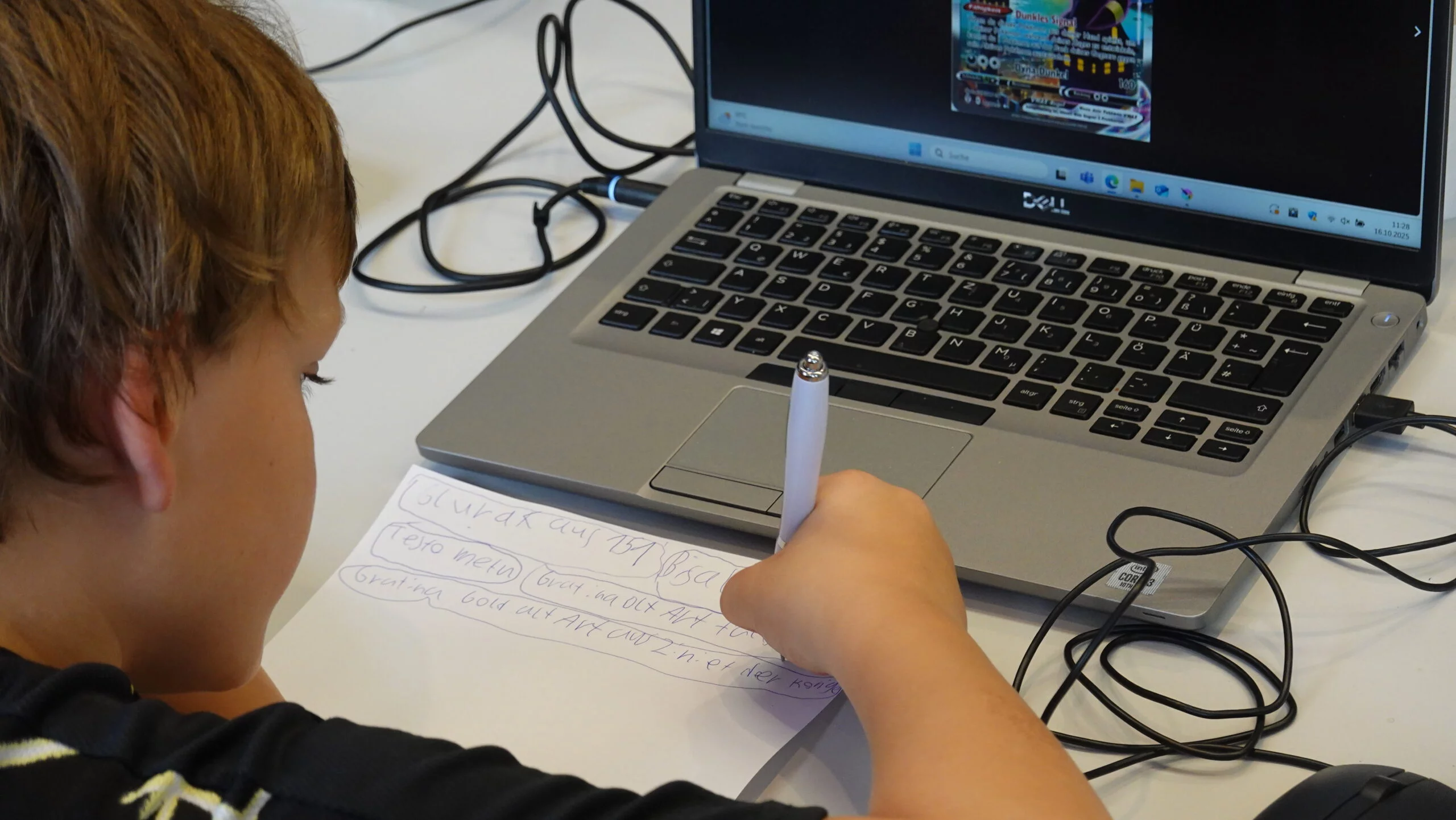
Card Concept Drafting on Paper
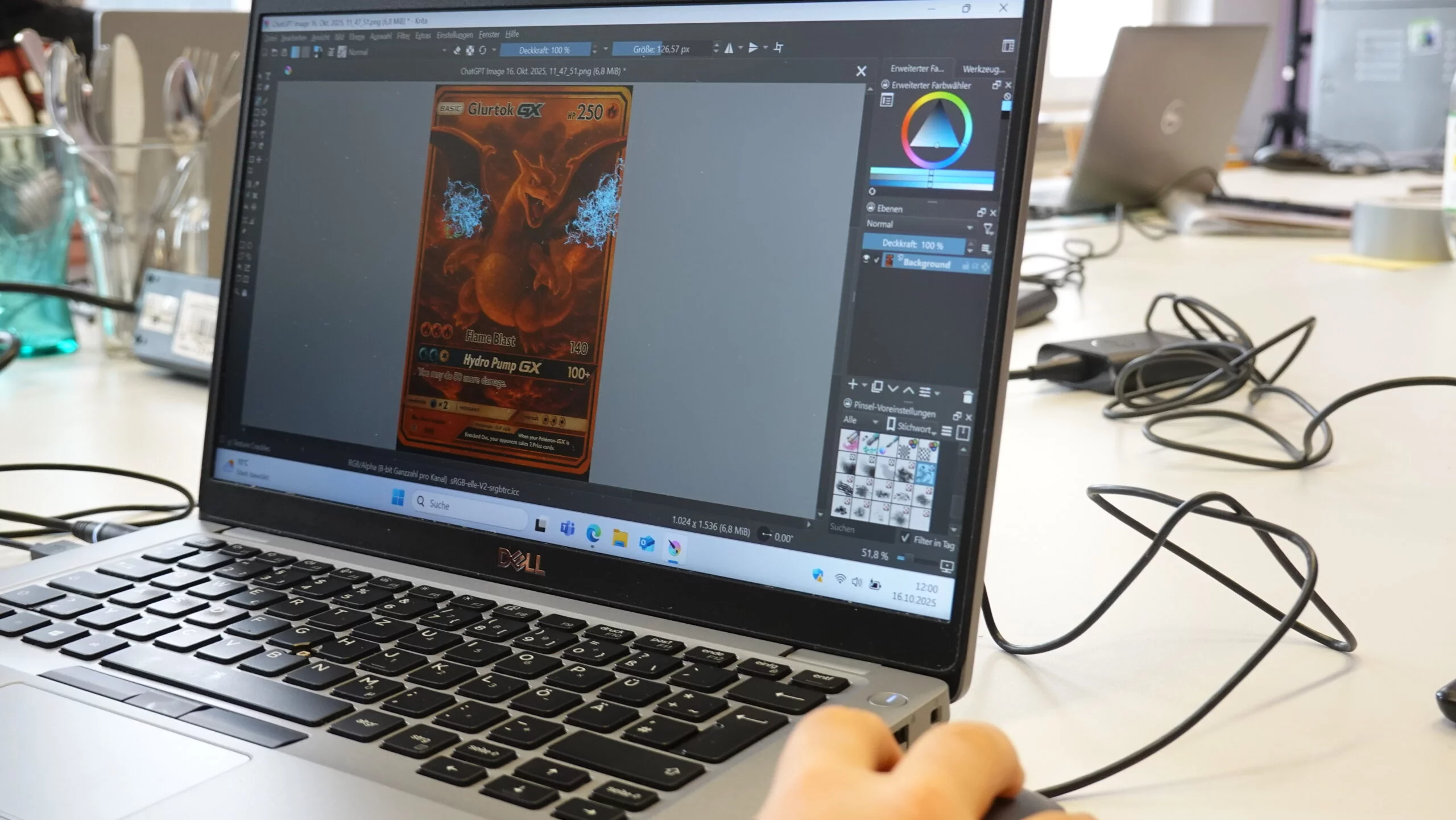
Layout, Design and Brushes in Krita.

Printing and Cutting
In just two workshop days (12 hours total), our young participants entered a joyful creation space with head, heart and hands during their autumn holidays. Our experience from past Wastemonster Card-design Playshops has been re-confirmed again: Youth has a natural ability to move in the digitanalogue. They do not divide and separate digital and analogue as much as adults, especially professionals. They naturally use the medium which serves best in their current production process.
We all share a passion for TCGs (Trading Card Games) – a global phenomenon and strong growing (10%) annual market worth $15 billion (2024). Titles like Pokémon and Yu-Gi-Oh! fuel our artistic imagination and strategic collections.
Our participants learned to articulate their own card concepts, transforming sketches into tangible products using open tools. The joy of holding their creations in hand made the process deeply rewarding.

All participants have extensive experience in collecting. On Day 2, they brought their art collections and provided detailed knowledge of each card, including its lore, background, and value system.

Only a small percentage of the collectors knew how to play the game or had engaged in sophisticated, strategic Duel Gameplay in the past. For most participants, simply collecting and gaining knowledge about cards—including their stories and values—seemed enough motivation to develop an affinity for the Collectible Card Brands.

One participant for example, learned how to optimize his clear art direction voice prompts for his AI assistant. The 10 year old participant was very specific about coloring, backgrounds, and originality. His goal was to remix two famous Pokémon cards: Glurak (a fire dragon) and Turtok (a water hippopotamus), which he reimagined as Glurtok combinging both fire and water.
However, the water splashes didn’t turn out as he envisioned, he learned to use manual brushes and layering effects in Krita, painting by hand and mouse until he was satisfied.
Our workflow and tools were designed to adapt to our participants, not the other way around. This was especially helpful for young participants with reading and writing challenges, as they could simply switch to clear, detailed voice prompts and graphical brushes instead.
The initial prompt, “Make me a monster,” naturally didn’t yield the results our participants envisioned. Instead, they refined their approach with for example:
“Design an Earth and Water Monster emerging from a river. Style: Anime/Manga with bold Water and Earth colors. Size: Card-sized.” Participants quickly learned to optimize their prompts—articulating their vision with growing precision. The fast feedback loops of iterations accelerated their “fast learning track.”
We identified 3 types of Designers among the Small Group Sample age 10-19:
- Collectors who want to recreate low quality versions of super rare cards. Not to fake – just to have them in their collection until they could successfully hunt and trade the real, watermarked, rare card.
- Players who want to create their own Cards, Stories, Values and Effects in their favorite Card Brand to play in private settings with friends.
- Designers who create their very own Tradecard Brand and System

Each Participant uploaded their results to our self hosted, open-source Nextcloud which enabled live presentation to the whole group – talking about designs and give feedback to each other.

To save paper and print color, we created a print sheet whenever 9 Cards have been produced.

In the final step, we went back to manual. Cutting the Cards, putting them into protective sleeves and into our Collectors Albums.
We are grateful and happy, that our first small-group pilot resonated so well with participants across the full age range (10–19). We have also received a beautiful, youth-collaborated card for our regenerative food systems game, fsys, dedicated to our partners in Busano, Uganda, who recently received a village and school Well for fresh water.
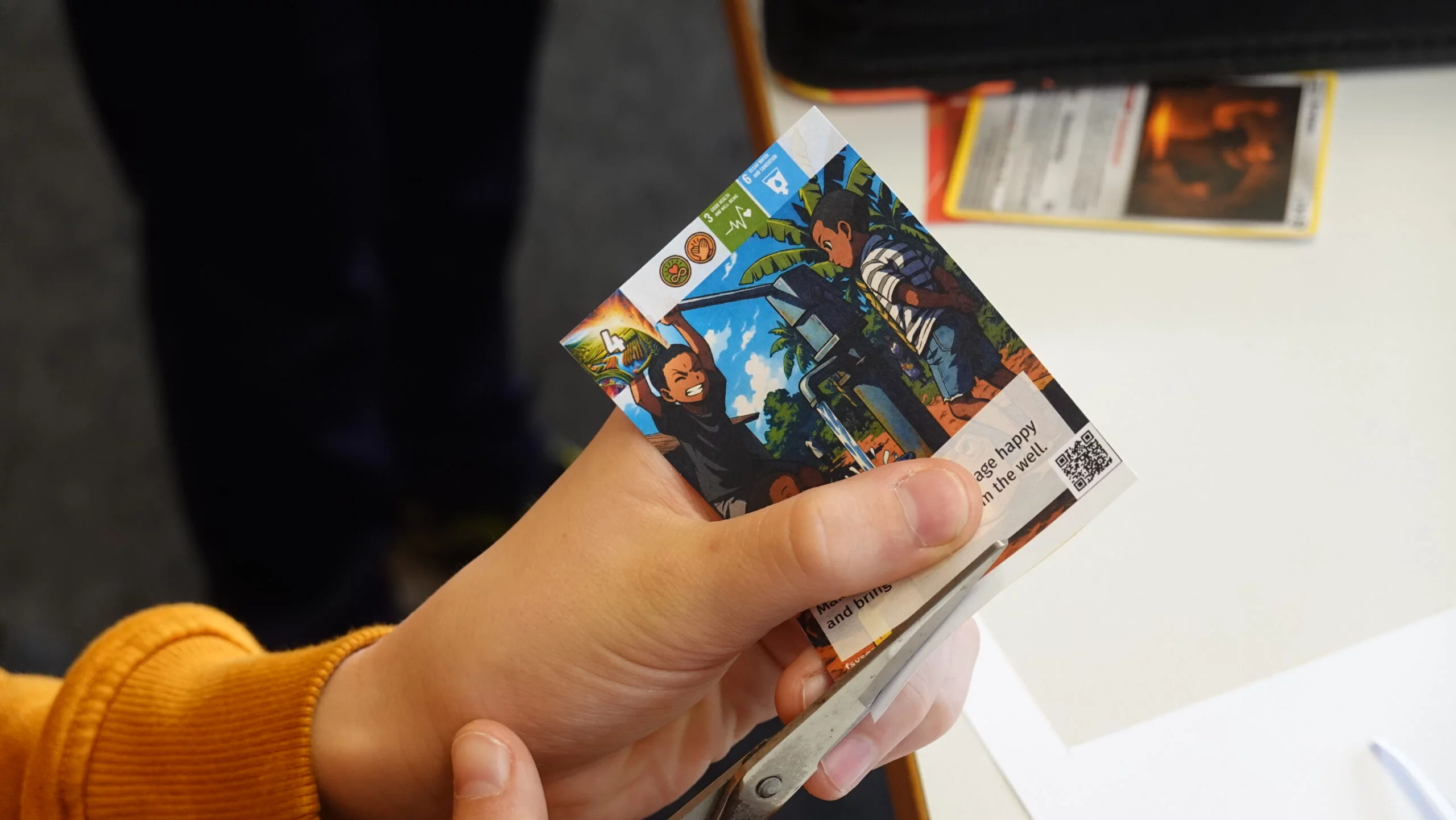


Thank you Rubin P. (Age: 12) for serving as the Art Director for this first Card in the Busano Booster Pack Series and for being so specific in your design request with a great eye for details! 🙂
The Card Webpage contains realworld photos and the Story of the Community Well. The Gift of Water.
It was crucial to first engage youth by sharing our accumulated “social capital” and the skills we gained during our own card development journey. Using AI tools and designing manually in an open-source graphic design app—without commercial constraints— served the need of our participants for their own projects.
Through peer mentorship, we empowered fellow students to forge their own creative paths and design the cards they envisioned.
The successful playshop was facilitated in collaboration with the Youth Development Department, City of Hessisch-Lichtenau, and youth care worker Kai Zerweck during the European Code Week 2025. The workshop was provided free of charge by Ktopia and André Boeing as part of the Regenerative food systems cardgame ( fsysgame.org ) development. Ktopia is a project partner of The Jena Declaration at the UNESCO Chair on Global Understanding for Sustainability